CLAsses
LIFE COACHING & YOGA NIDRA
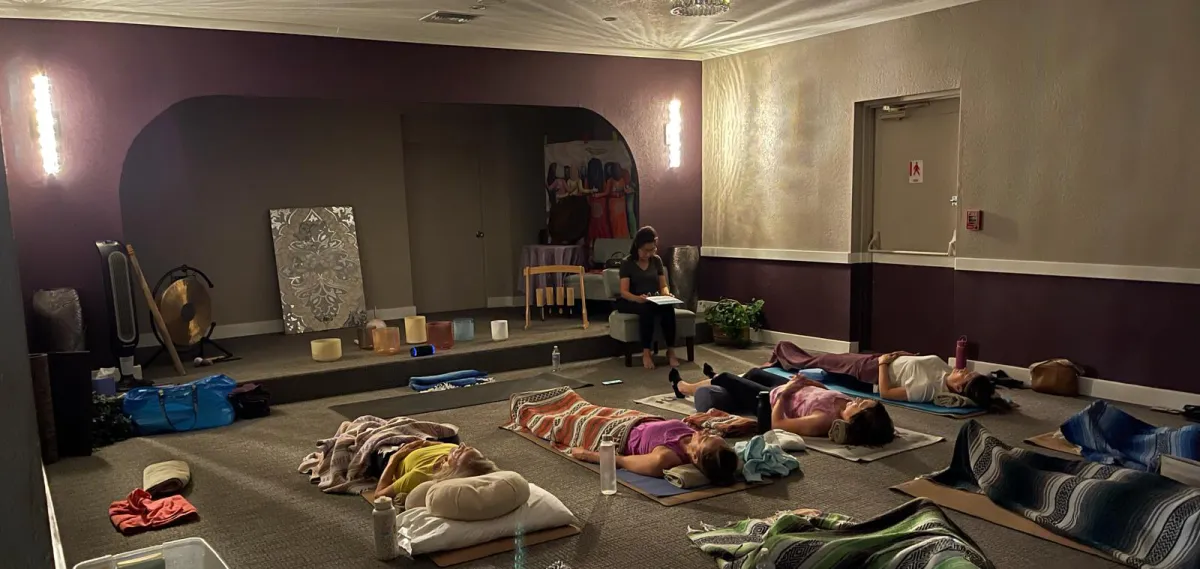
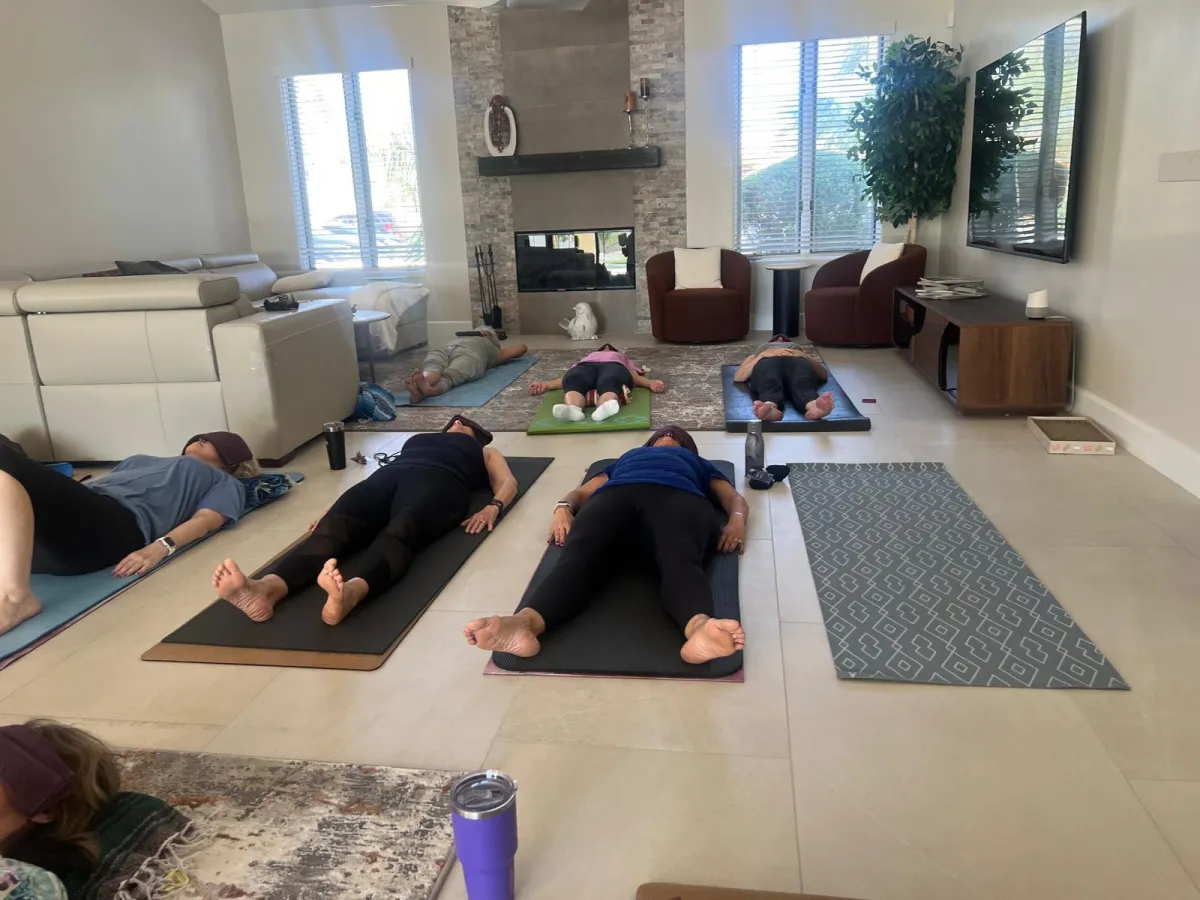
Yoga Nidra is a meditation technique that harnesses the biological process of sleep for a spiritual process. Using a series of breath, body and awareness techniques, yoga Nidra consciously follows the brainwaves down towards sleep where thoughts naturally distance themselves. Here we can easily enter the gap between us and our thoughts and re-establish the experiential knowing that we are more than what the mind thinks.
I use this method in my Life coaching to clear the sub-conscious from unwanted patterns of thoughts, and also the certain ways of being that is learned, inherited or even pass to us from past generations , but is not serving us. This work is transformational and specifically breaks the patterns of co-dependency.
"First session is free after evaluation".
Benefits
Increase- Decreased anxiety, depression, muscle tension, and cardiac stress.
- Studies: Shown benefits for breast cancer and PTSD.
- Promotes restful sleep.
- Regulates body biorhythms.
- Controls the biological clock that determines the aging process.
- Supports memory and mood.
- Decreases depression.
- Regulates satiety.
- Helpful for Bi-polar conditions.
- Creates feelings of calm, contentment, and security.
- Reduces fear, anxiety, and pain.
- Creates an all-encompassing sense of happiness.
- Linked to anti-cancer properties.
- Enhances focus and motivation.
- Helpful for Parkinson’s disease.
- Enhances memory and alleviates depression.
- Reduces risks: Aging, heart attack, diabetes, cancer, osteoporosis, obesity.
Stressors
DecreaseKey Insight: When cortisol is elevated in the body, it causes damage to many organs. Yoga Nidra has a direct impact on decreasing Cortisol and the side effects of it.
- Accelerates aging and decreases bone density.
- Elevates blood pressure and suppresses thyroid function.
- Weakens cognitive performance.
- Causes blood sugar imbalances (e.g., hyperglycemia).
- Decreases muscle tissue and lowers immunity.
- Increases inflammatory responses in the body.
- Increases abdominal fat (associated with many health risks).
- Related to heart attacks and strokes.
- Increases "bad" cholesterol (LDL) and decreases "good" cholesterol (HDL).
- Reduces sensitivity to Fight/Flight hormones.
- Takes more stimulation to initiate the stress response (improves stress threshold).
Yoga Nidra I, II and III
- Dreamlike images intermingling with guidance.
- Mind chattering but not participating.
- Can seem as if not deep, but when asked to come back you do realize you were in a different state than waking.
- Gaps of awareness– "in and out"
- Words are heard but don't make sense
- Not hearing anything at all
- Trancelike, non-physical state
- Complete loss of body awareness
- Difficult/takes time to come back (can feel unable to move for a while).
- YN II and III can also be experienced as paradoxical stillness – body deeply relaxed and mind awake and present.
FAQs
Answer Some Yoga Questions
What do I need for yoga Nidra?
You need a comfortable mat or soft surface, a blanket or pillow under your head, knees or under lower back ( if it feels more comfortable). A blanket for warmth and grounding ( cover yourself). I also like to use an eye pillow or soft scarf to block light and relax the nervous system.
Is yoga Nidra different from meditation or hypnosis?
Yoga Nidra is different from both since its a guided practice that brings you into a state between waking and sleeping. You remain aware and in control the entire time. While your body sleeps, your brain stays gently alert and often includes a Sankalpa( heart-felt intention).
Can Yoga Nidra support better sleep?
Yoga Nidra support healthy Melatonin production by reducing stress hormones. High cortisol ( stress hormones) suppresses melatonin. Yoga Nidra lowers cortisol, allowing melatonin to rise naturally in the evening. Deep relaxation caused by yoga Nidra signals the brain that its safe to rest, supporting the body’s natural sleep-wake cycle.
How often should I practice Yoga Nidra for lasting benefits?
By practicing 3-5 times per week you will see noticeable, sustainable benefits. By practicing daily ( 10-30 minutes ) deeper long-term nervous system regulation and even once a week is beneficial but results build faster with regular practice.